In Kürze
Worum geht es in dem Podcast?
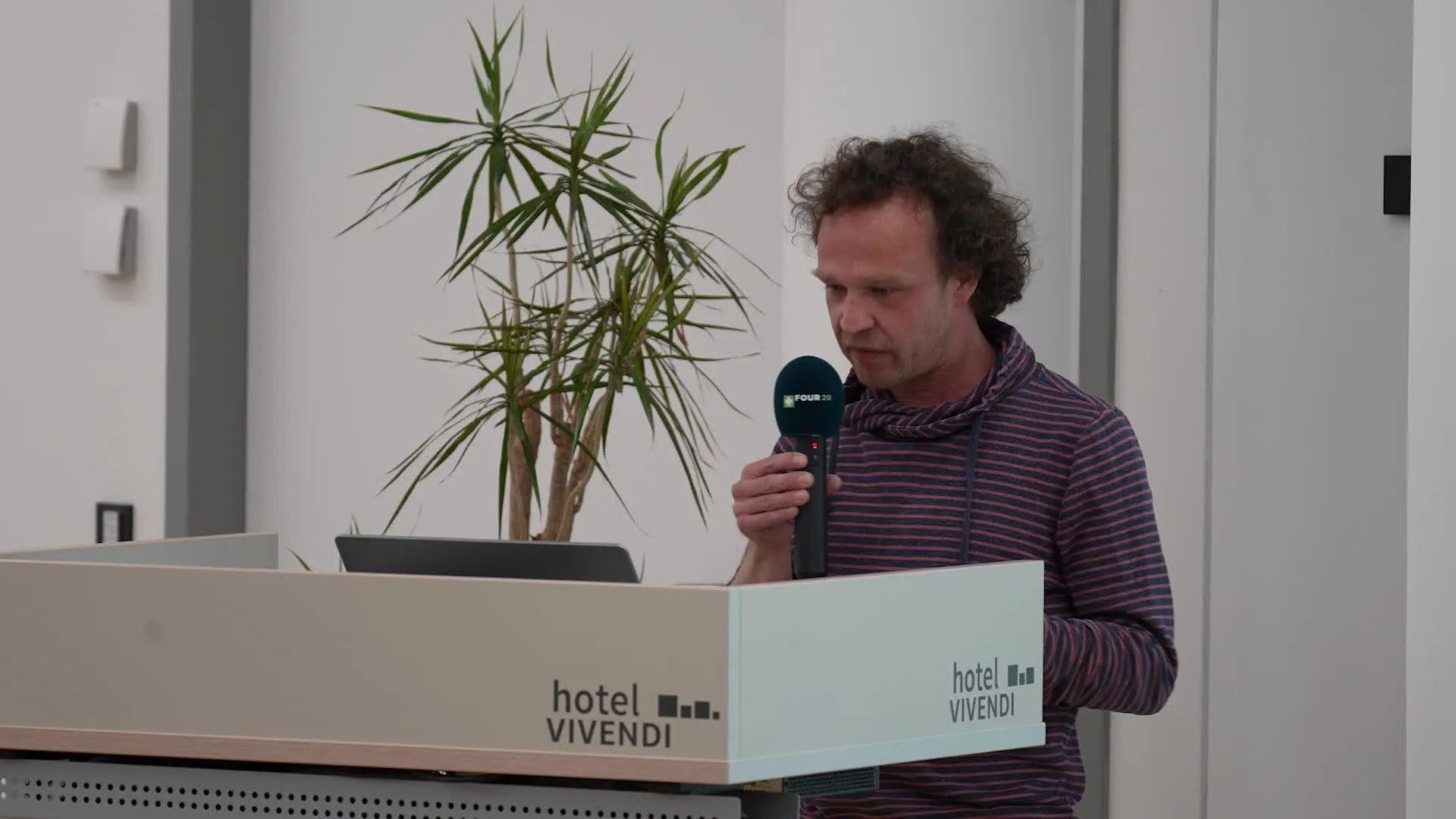
Dr. med. Daniel Huse, a specialist in anesthesiology, pain therapy and osteopathic medicine, runs a private practice focused on specialized pain therapy and osteopathic treatment. In his trailer for the Circle of Experts 2026, he shifts the perspective away from pure pain reduction towards the functionality of the myofascial system — thereby framing a therapeutic goal that often falls short in conventional pain medicine.
Starting from the fascia atlas of the Stecco research family, Huse shows why fascia can no longer be understood as passive connective tissue: it is permeated by nerve endings, connects structures across large anatomical distances and reacts to both load and dysfunction. He makes this clinically tangible using the thoracolumbar fascia — a pull on the latissimus affects the contralateral gluteus, and an overload of the upper extremity not infrequently manifests as lower back pain. Even a seemingly harmless constipation under opioid therapy can irritate the psoas and tip the clinical course of a low-back-pain treatment.
At the center of his contribution is the connection between fascia, the dorsal root ganglion and the endocannabinoid system: in the superficial spinal cord region, significantly more CB1 receptors are expressed — consistently across sex and species. From this, Huse derives his clinical experience that myofascial and osteopathic aspects form an important context for the discussion of cannabinoids in pain therapy. Especially in myofascially guided joints such as the shoulder, where there is little bony stability, he sees cannabinoids as a possible point of discussion in the myofascial context.
Drei Formate an einem Tag - der Circle of Experts
Fachvorträge
Klinische Praxis aus Schmerz- und Palliativmedizin, Neurologie, Pharmakologie, Pflege und Apotheke. Kurze Slots, hoher Praxisbezug, Q&A direkt im Anschluss.

Fachdiskussionen
Moderierter Austausch zwischen Klinik, Praxis, Apotheke und Pflege. Themen werden vorab gesammelt und gemeinsam priorisiert.

Netzwerken
Klinik, Praxis, Apotheke und Pflege kommen in kleinen Tischrunden gezielt miteinander ins Gespräch, vertiefen Kontakte aus dem Tagesprogramm und knüpfen neue Verbindungen.
Die Fachexpert:innen
Klinik, Forschung, Apotheke und Pflege — die Sprecher:innen kommen aus den Bereichen, in denen Medizinalcannabis täglich angewendet wird.
Prof. Dr. mult. Eckhard Nagel
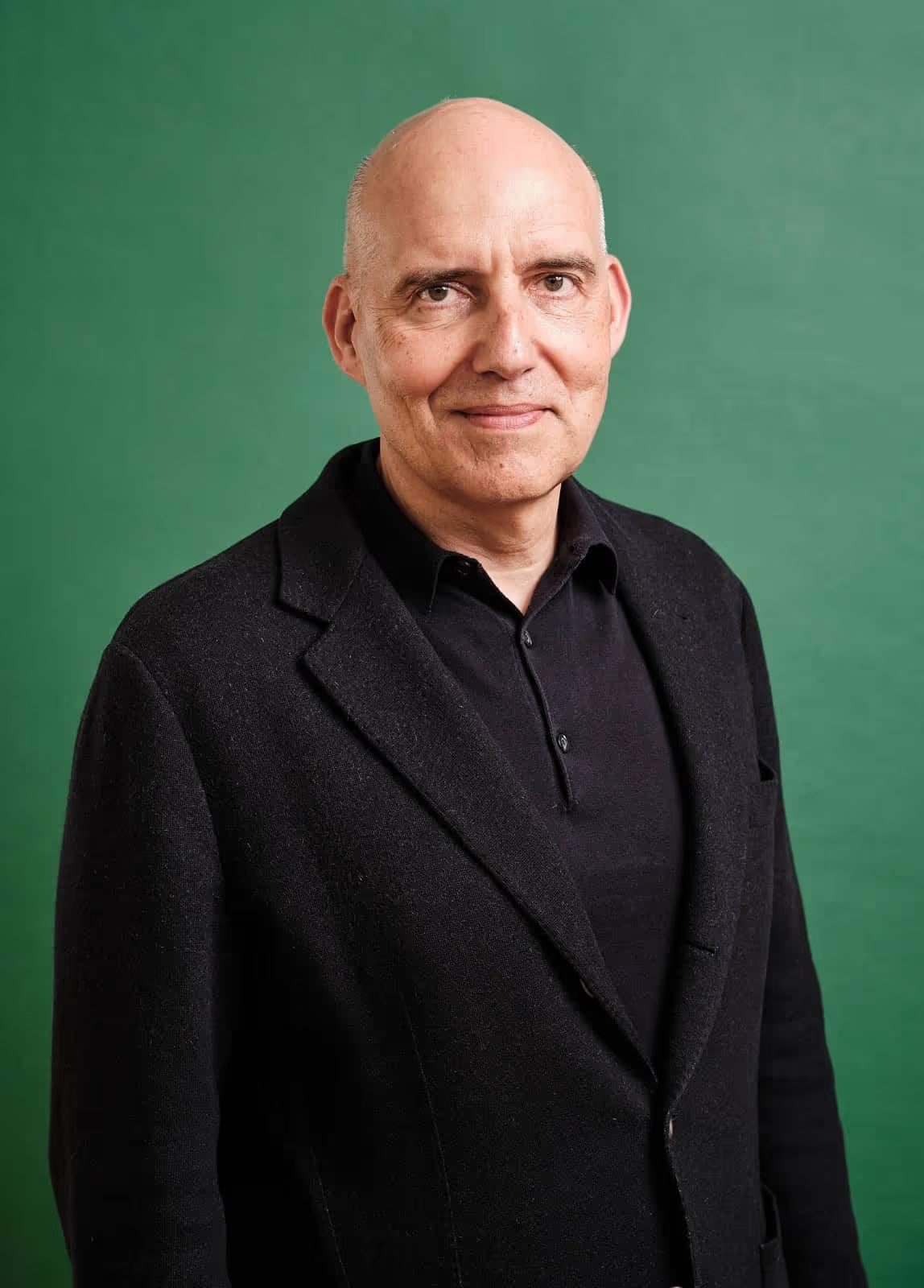
Prof. Dr. mult. Eckhard Nagel is Managing Director of the Institute of Medical Management and Health Sciences at the University of Bayreuth. At the Circle of Experts, he examines the ethical aspects of medical cannabis therapy and advocates for real-world studies.

Prof. Dr. med. Thomas Herdegen
Prof. Dr. med. Thomas Herdegen is a specialist in pharmacology and toxicology and was for many years deputy head of the Institute of Experimental and Clinical Pharmacology at UKSH Kiel. He is co-author of the Cannabis practice guideline and recipient of the German Pain Award 2024.

Dr. med. Dipl.-Chem. Konrad F. Cimander
Dr. med. Dipl.-Chem. Konrad F. Cimander is a specialist in general and addiction medicine, heads the K.C.M. Hannover Competence Center for cannabis medicine and is President of the German Medical Cannabis Society (DMCG). He is a lecturer on addiction medicine, psychopharmacology and cannabis medicine.


Dr. med. Matthias Giesel
Dr. Matthias Giesel is a specialist in anesthesiology and heads the pain clinic at Marienkrankenhaus Soest as well as the practice for pain therapy and palliative medicine at the Hospitalverbund MVZ Soest. He works as a consultant to the pharmaceutical industry on medicinal cannabis.
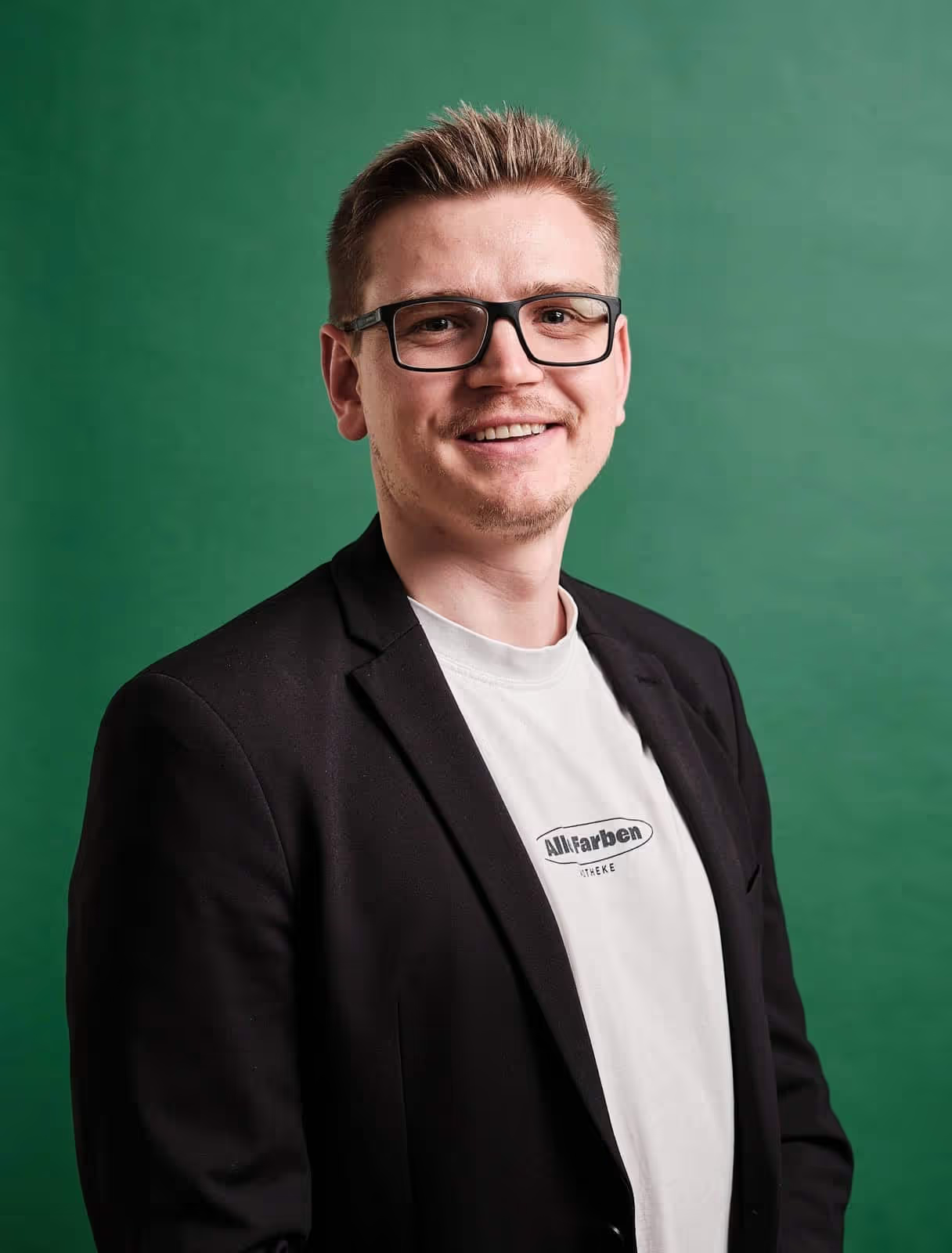
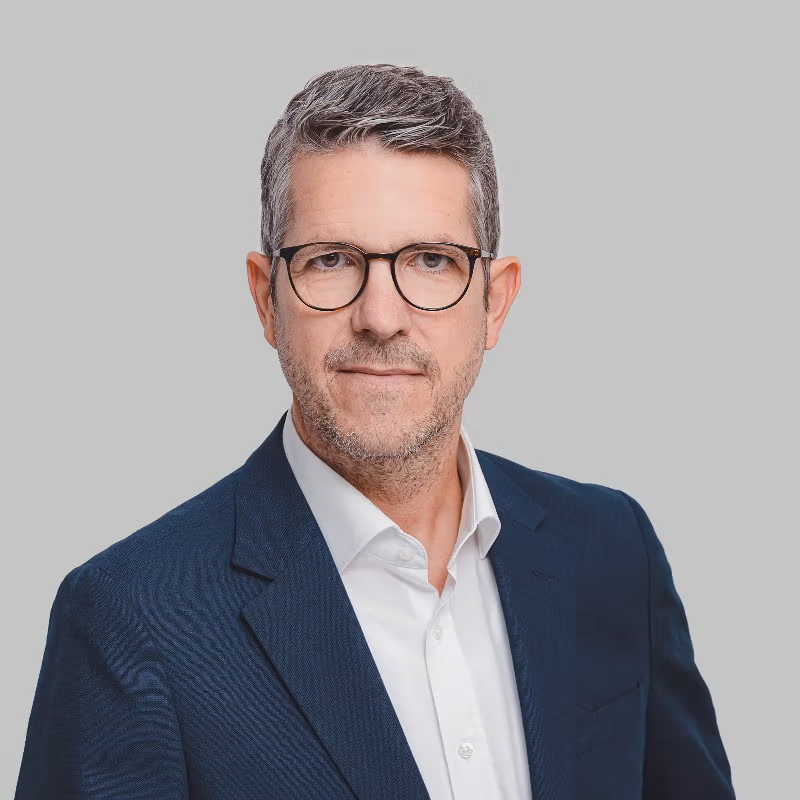
Sascha Saßen
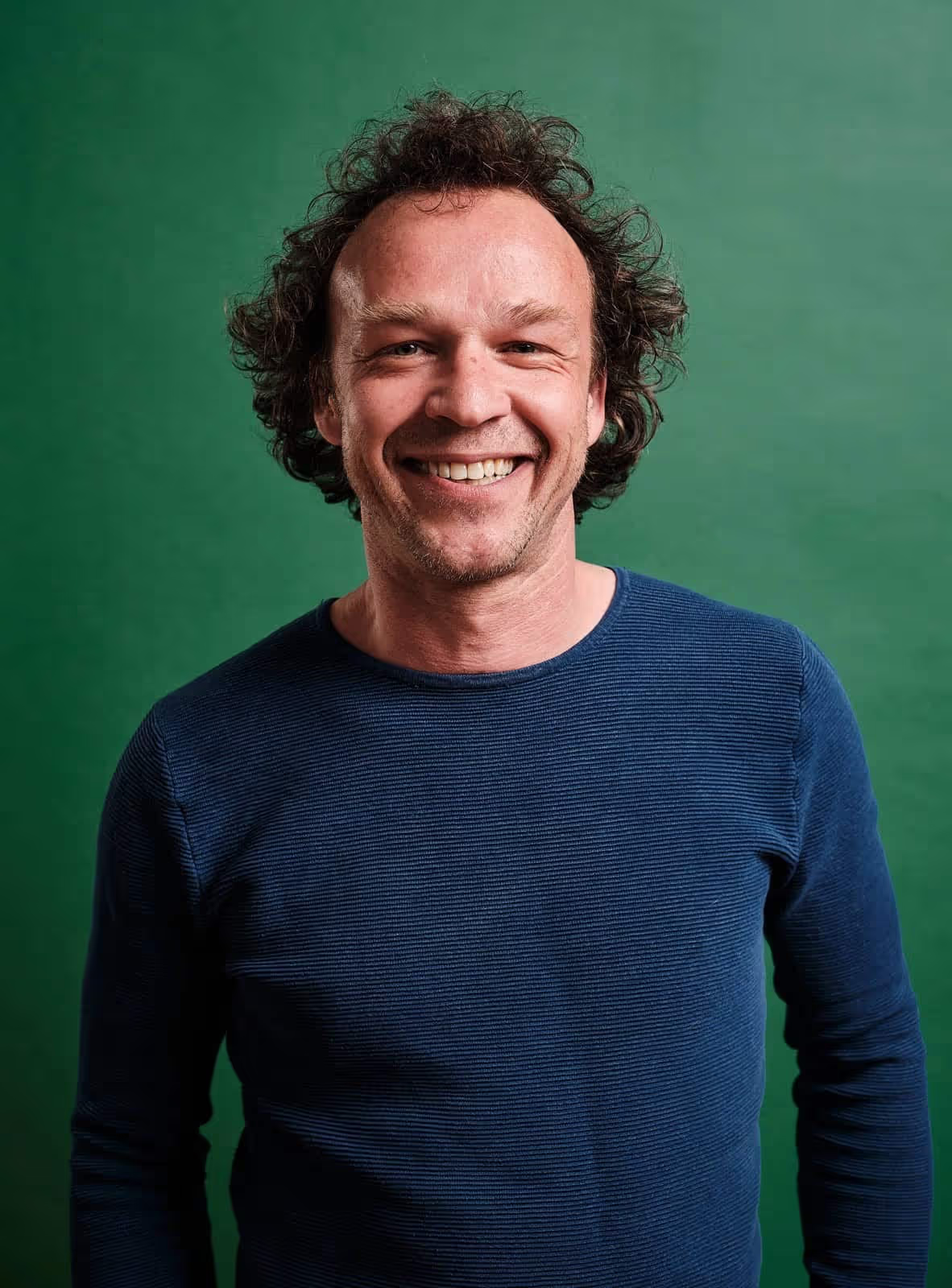
Sascha Saßen holds a degree in nursing management (Diplom-Pflegewirt), is a certified pain expert (CEKIP) and has been CEO of the hesena Group since April 2025. At the Circle of Experts he spoke on pain management in inpatient long-term care and on the medication process in nursing and palliative care.
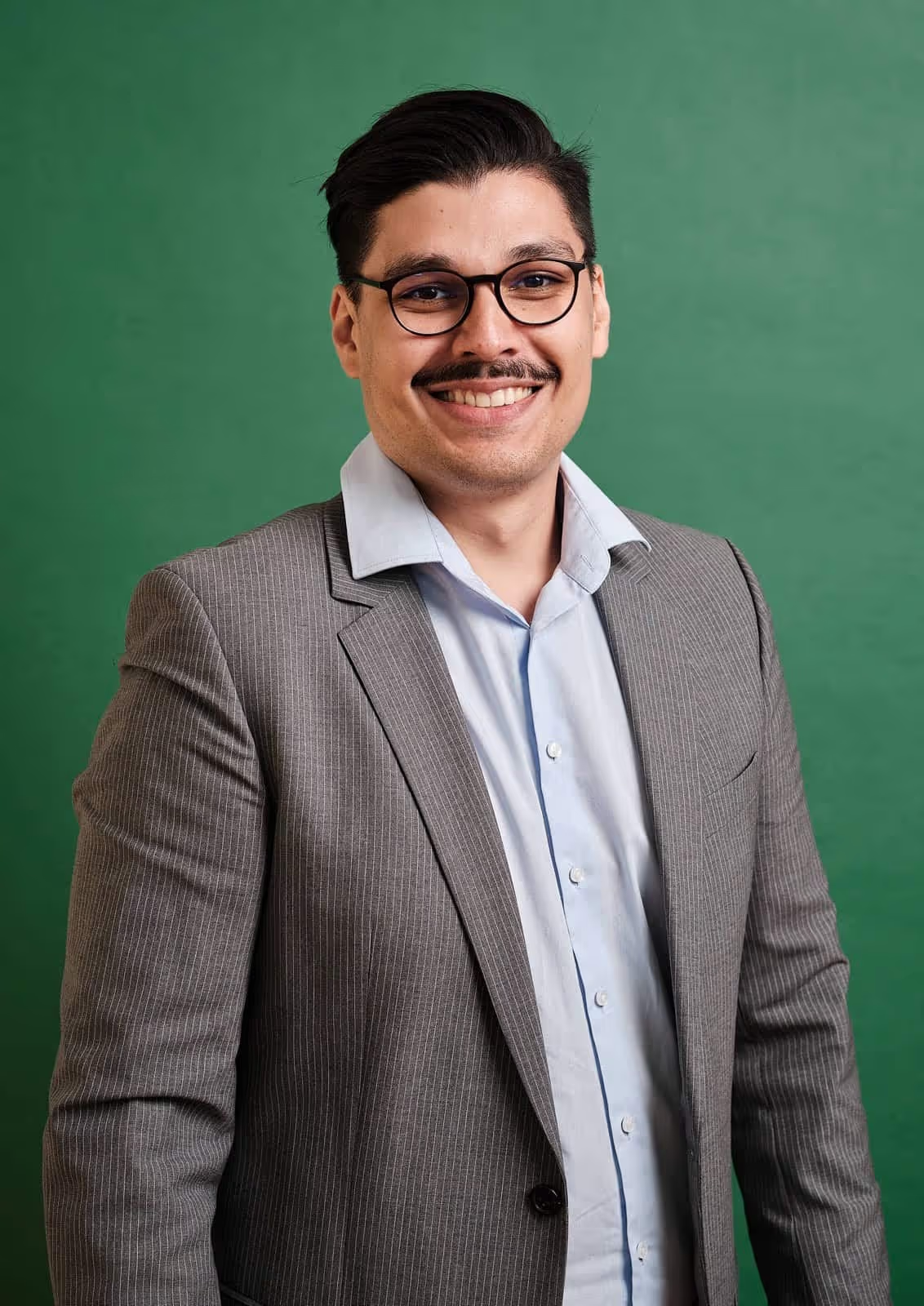
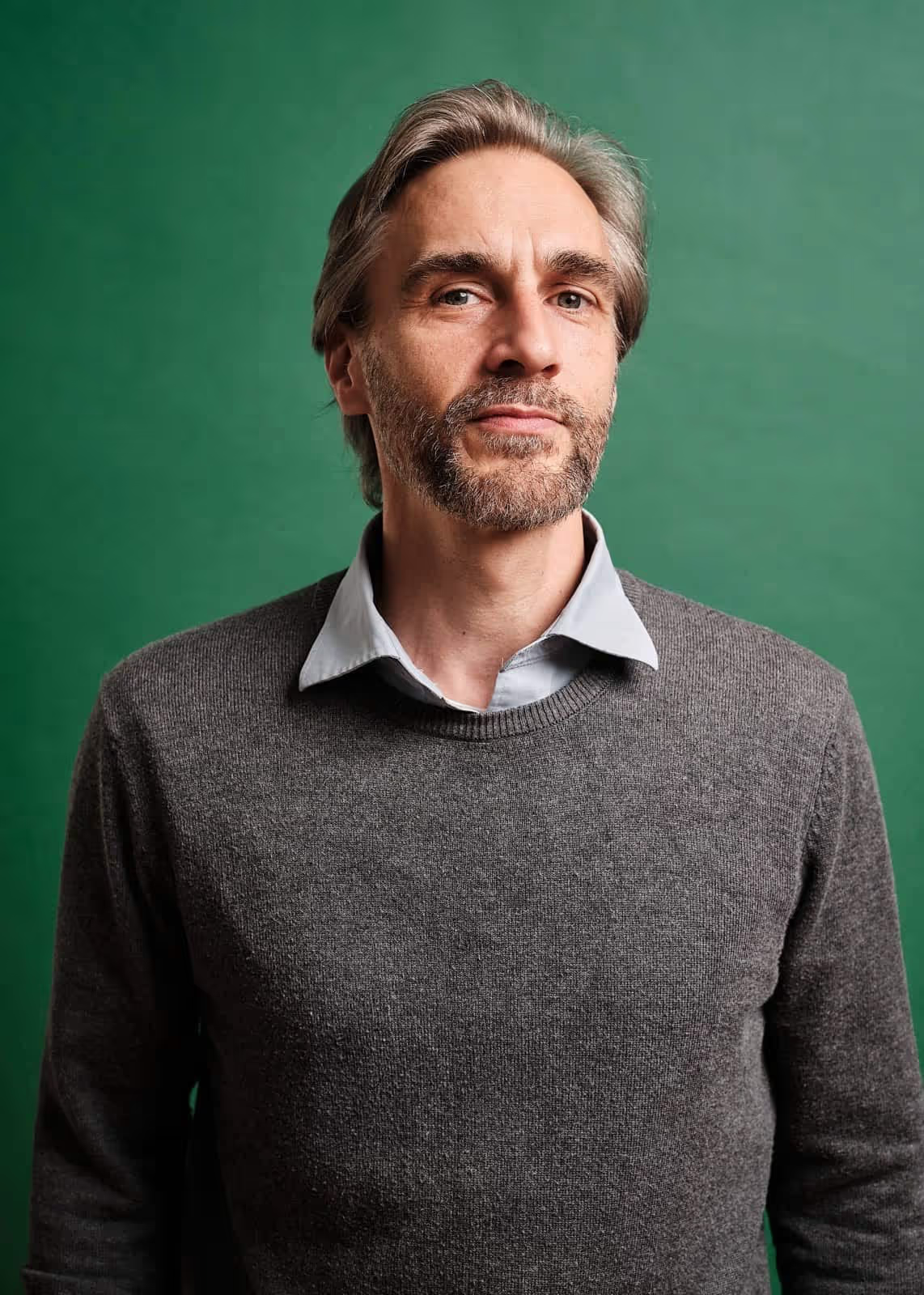
André Ihlenfeld
Dr. André Ihlenfeld is a specialist in anesthesiology and a pain physician, as well as Medical Director at Copeia, where he is responsible for projects on patient-reported data collection under cannabis therapy (including the Physicians Experience Platform). He is co-author of publications on cannabis-based medicines.
Weitere Informationen
- [00:16] — What is decisive is not pain reduction, but what it does to function.
- [00:52] — Prof. Stecco's atlas presents current data on the thoracolumbar fascia and fascia research.
- [01:34] — Opioid therapy in low back pain can irritate the psoas via constipation.
- [02:23] — Significantly more CB1 receptors in the superficial spinal cord region at the dorsal root ganglion.
- [03:11] — Myofascial guidance at the shoulder joint and implications for pain therapy.
Mein Name ist Daniel Huse, ich bin Facharzt für Anästhesie. Ich habe eine Praxis für spezielle Schmerztherapie mit einem osteopathischen Schwerpunkt. Bei uns ist ja immer so: Was macht der Schmerz? Wie weit ist die Schmerzreduktion? Wenn ich myofaszial arbeite, ist diese sekundär. Entscheidend für mich ist: Was macht die Funktion? Die Faszie selber hat viele Eigenschaften, gehe ich nachher noch ein bisschen drauf ein. Und die ist ganz entscheidend für eine gute Beweglichkeit, für ein gutes muskuläres Zusammenspiel.
Das ist ein Atlas über das menschliche Fasziensystem von Prof. Stecco. Den kann ich nur empfehlen, diesen Atlas. Da sind wirklich ganz aktuelle Daten zur Faszienforschung, wie so eine Faszie eben aussieht. Da sind Nervenendungen, da passiert relativ viel in diesem System. Und wir Ärzte haben das leider so ein bisschen ausgelagert. Hier jetzt ein Beispiel aus dem Atlas: Man sieht auf der linken Seite die Thoracolumbalfaszie. Und auf der rechten Seite einfach mal so ein Bild, was das für bindige, derbe Strukturen sind, die sich dann eben anhand so einer Belastung anordnen.
Und hier schauen wir auf die thoracolumbale Rückenfaszie. In der Schmerztherapie oder in der osteopathischen Medizin ist das eben ein Störfeld. Und man kann sich gut vorstellen: Wenn ich oben links am Latissimus ziehe, dass ich eine unmittelbare Auswirkung auch unten rechts auf den Gluteus habe. Und wenn ich viel über die obere Extremität trainiere, habe ich nicht selten eine Dysfunktion im unteren Rückenbereich. Das muss man eben beachten. Wenn ich jetzt eine Opioidtherapie bei Low Back Pain beginne und habe eine Obstipation, kann man sich vorstellen, dass der Darm, der Stuhl in der linken Beckenschaufel im Sigma länger liegen bleibt und wir haben dann da Luft- und Gasbildung. Kann man sich schon vorstellen, dass da in der Beckenschaufel der Psoas irritiert wird und dass die Patienten eben sagen: So eine Opioidtherapie, mir geht es jetzt schlechter. Mir ging es vorher besser, und so richtig wirkt es eben nicht.
Hier möchte ich nochmal dieses Spinalganglion zeigen, da wo die Sensorik, wo eben die Verarbeitung stattfindet, dann mit dem Rückenmark. Und hier schauen wir darauf, wie das bei uns aussieht. Wir gucken von hinten aufs Rückenmark rechts. Zwischen zwei Facettengelenken ist dieses Spinalganglion gut geschützt und geparkt. Und er konnte zeigen, dass in dieser oberflächlichen Rückenmarksregion deutlich mehr, signifikant mehr CB1-Rezeptoren exprimiert werden. Das ist über Geschlecht und Spezies konstant.
Meine Erfahrung mit den Cannabinoiden: Im Kontext einer fachlichen Begleitung wird die individuelle Behandlungsfrequenz diskutiert. Die Physiotherapeuten haben nachgefragt, was ist passiert? Die Funktionalität, wenn die so mit einer Halswirbelsäule arbeiten, sie bewegen die, sie haben da Ausmaße. Und wenn sie vorher bei 35 Grad waren und das Ende war, und dann irgendwann sind 50, 60 Grad drin, dann rufen die an und fragen, was da passiert ist. Und die arbeiten eben auch jeden Tag mit diesem Gewebe. Und von denen habe ich so die erste Rückmeldung bekommen Richtung Funktionalität. Und wenn ich mir jetzt so ein Schultergelenk anschaue: Das ist überwiegend myofaszial geführt, da habe ich wenig Stabilität im Gegensatz zum Knie. Da kann ich mir gut vorstellen, wenn da so ein Trauma passiert ist, eine Kraft eingewirkt hat, dass ich dieses myofasziale Gewebe erstmal eben detonisieren muss. Schulter oder bei Gelenken, die gar nicht so viel statische Arbeit leisten müssen, ist ein Cannabinoid eben auch sehr elegant.